
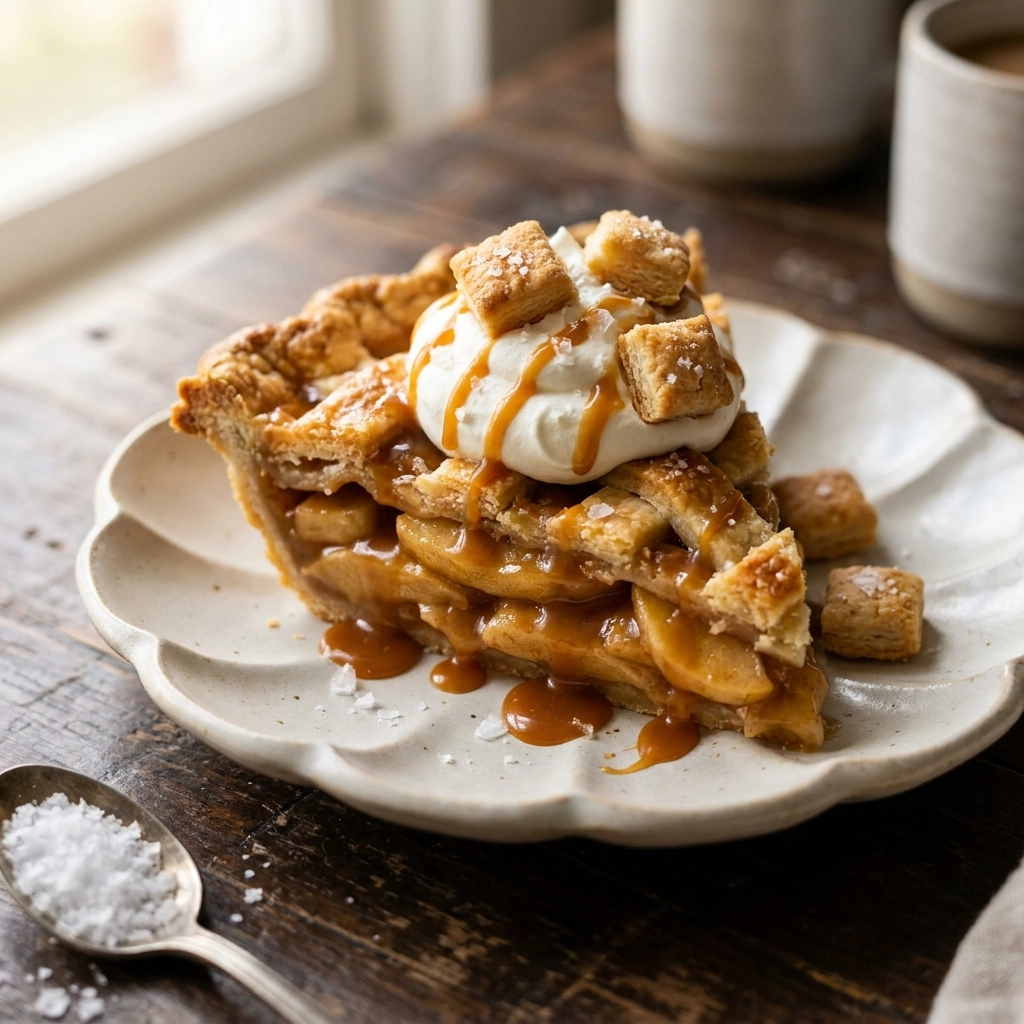
A Journey Into Caramelized Autumn |
I once believed that adding salt to a dessert was a daring risk that would inevitably ruin the balance of sweetness. My first attempt resulted in a chaotic, over-salted mess that tasted more like a brine than a baked treat. It was a humbling lesson in proportions. I learned that salt does not compete with sugar; instead, it illuminates the deeper notes of brown sugar and butter, turning a simple dessert into a complex experience.
This obsession began years ago at a tiny, wind-swept bakery in the heart of Vermont. The scent of simmering cinnamon and toasted sugar clung to the walls, drawing me toward a slice of apple pie that shimmered with a golden, salty glaze. That single bite shifted my perspective on traditional pies. I realized that the contrast between tart fruit and savory caramel creates a tension that keeps you coming back for more.
- ●The contrast of flaky, buttery pastry against a gooey, molten center.
- ●A sophisticated blend of sea salt that cuts through the heavy sugar.
- ●The use of multiple apple varieties to create a complex flavor profile.
- ●An adaptable filling that invites you to play with different spices.
- ●A visually stunning presentation that serves as a centerpiece for any feast.
Essential Ingredients |
Granny Smith Apples are technically a cross between a French apple and a green Gage. They provide the essential acidity needed to balance the rich caramel.
Unsalted Butter was historically a luxury item for the nobility before becoming a household staple. It provides the fat required for a tender, shattering crust.
Brown Sugar contains molasses, which gives it a deeper, more earthy tone than white sugar. This adds a dark, caramelized hue to the filling.
Sea Salt is harvested , leaving behind mineral-rich crystals. It acts as the catalyst that enhances all other flavors.
Cinnamon comes from the inner bark of trees in the Cinnamomum genus. It brings an aromatic warmth that anchors the fruit’s brightness.
Cornstarch is a fine powder extracted from maize. It ensures the filling thickens so your slices stand tall instead of slouching.
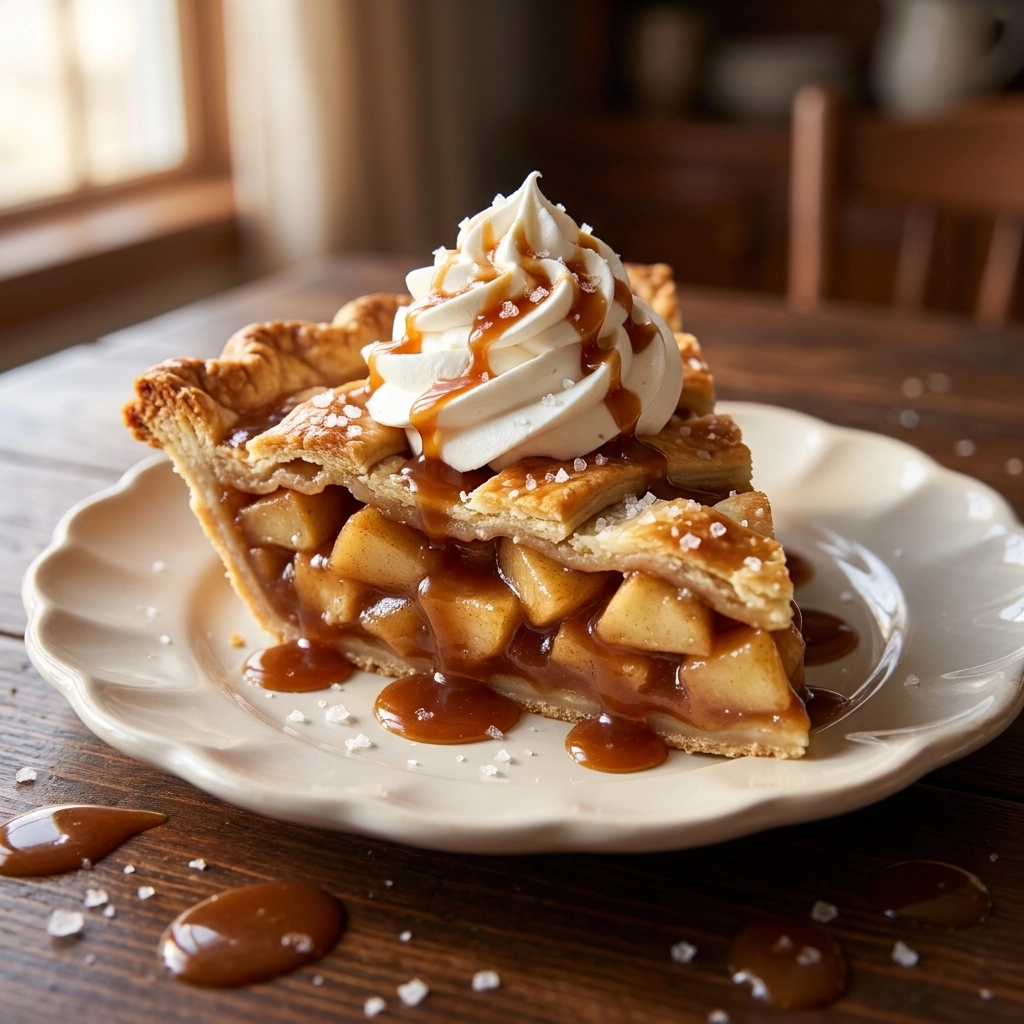 Let’s Make it Together |
- Chill your butter and flour mixture in the freezer for twenty minutes. Pro tip: Cold fats are the secret to those coveted flaky layers.
- Sauté the sliced apples with brown sugar and cinnamon over medium heat until they begin to soften.
- Whisk the salted caramel sauce separately, ensuring the sugar reaches a deep amber color before stirring in the cream.
- Roll the chilled dough into two circles, ensuring the edges are even. Pro tip: Use a light touch to avoid compressing the butter pockets.
- Layer half of the apples in the bottom crust, then drizzle a generous amount of salted caramel over the fruit.
- Fold the remaining apples on top and seal the edges with a fork. Pro tip: Crimp tightly to prevent the caramel from leaking during the bake.
- Bake at 400°F for 15 minutes, then reduce to 375°F for another 40 minutes until the crust is golden brown.
Avoid using warm butter in your crust or the pastry will be tough.
Always peel your apples thinly to preserve the fruit’s natural structure.
Do not over-stir the caramel once it reaches the amber stage.
Let the pie cool completely before slicing to allow the filling to set.
Use a parchment-lined sheet to catch any caramel drips from the pan.
Perfecting the Cooking Process |
Temperature control is the heartbeat of this recipe. You must start the oven at 400°F (204°C) to create an initial blast of heat. This triggers the steam release in the butter, which pushes the dough layers apart and creates flakiness. If you start too low, the crust remains dense and lacks that professional shatter.
The chemistry of the caramel requires patience and a keen eye. You are looking for the Maillard reaction, where proteins and sugars transform under heat. When the sugar reaches roughly 340°F, it develops a nutty, complex profile. If you go beyond this, the caramel becomes bitter; if you stop too early, it tastes like plain syrup.
Timing the cool-down period is just as vital as the bake. The cornstarch needs time to form a gel structure as the pie drops from oven temperature to room temperature. Slicing into a hot pie causes the molten caramel and apple juices to run, ruining the presentation. Wait at least three hours for a clean, sharp cut.
Add Your Touch |
Feel free to swap the Granny Smith apples for a mix of Honeycrisp and Braeburn. This creates a sweeter, more floral base that pairs wonderfully with the salt. You might also experiment with a pinch of ground cardamom or nutmeg to introduce a more exotic, spicy depth to the filling.
For a bold variation, try adding a layer of toasted pecans between the apples and the caramel. The crunch of the nuts provides a texture contrast that disrupts the softness of the fruit. You can even brush the top crust with a maple glaze instead of traditional egg wash for an extra layer of woodland sweetness.
Storing & Reheating |
Store leftovers in the refrigerator for up to five days. Keep the pie in its original pan but cover it loosely with foil to prevent the crust from absorbing fridge odors.
To reheat, avoid the microwave as it makes the crust soggy. Place a slice in a 325°F oven for ten minutes to restore the crispness of the pastry and the fluidity of the caramel.
1Use a potato masher to break up butter into the flour quickly.
2Squeeze excess moisture from apples if they seem too juicy.
3Apply an egg wash for a high-gloss, professional gold finish.
4Freeze the shaped pie for ten minutes before putting it in the oven.
5Use a sharp serrated knife to slice through the crust without crushing it.
FAQ |
- ●Q: Why did my pie crust turn out hard instead of flaky?A: This usually happens when the butter melts before the pie hits the oven. If the fats incorporate fully into the flour, you get a cookie-like texture rather than distinct, flaky layers of pastry.
- ●Q: Can I use store-bought caramel instead of making my own?A: You can, but homemade caramel allows you to control the salt level and quality of the butter. Store-bought versions often contain thickeners that change the texture of the filling. Always keep in mind that results can vary depending on your specific ingredients, equipment, and kitchen conditions, so taste as you go and adjust accordingly for the best outcome.
- ●Q: Which apples are the best for this specific recipe?A: A combination of Granny Smith for tartness and Honeycrisp for structure is ideal. This ensures the apples do not turn into mush while providing a balanced flavor profile. Always keep in mind that results can vary depending on your specific ingredients, equipment, and kitchen conditions, so taste as you go and adjust accordingly for the best outcome.
- ●Q: How do I stop the bottom crust from getting soggy?A: Pre-bake the crust for 5 minutes or brush a thin layer of melted butter on the bottom. This creates a moisture barrier that protects the dough from the juicy apple filling.
Ultimate Salted Caramel Apple Pie Recipe Perfect for Fall
- Prep Time: 45 minutes
- Cook Time: 60 minutes
- Total Time: 1 hour 45 minutes
- Yield: 8 servings 1x
- Category: Dessert
- Method: Baking
- Cuisine: American
Description
A decadent apple pie featuring a salted caramel swirl and a flaky, buttery crust. A sophisticated twist on the classic autumn dessert.
Ingredients
- 6 large Granny Smith apples, peeled and sliced
- 2 1/2 cups all-purpose flour
- 1 cup cold unsalted butter, cubed
- 1 cup brown sugar
- 1 tsp ground cinnamon
- 2 tbsp cornstarch
- 1 cup granulated sugar (for caramel)
- 1/2 cup heavy cream
- 4 tbsp salted butter (for caramel)
- 1 tsp sea salt
- 1 egg (for wash)
Instructions
- Mix flour and cold cubed butter until pea-sized crumbs form; chill for 20 minutes.
- Sauté sliced apples with brown sugar and cinnamon until slightly softened.
- Prepare caramel by melting granulated sugar to amber, then whisking in cream and 4 tbsp butter.
- Roll out the chilled dough into two circles for the top and bottom crusts.
- Place one crust in the pie dish, add half the apples, drizzle with caramel, then add remaining apples.
- Top with the second crust, seal the edges, and brush with egg wash.
- Bake at 400°F for 15 minutes, then reduce to 375°F and bake for 40 more minutes.