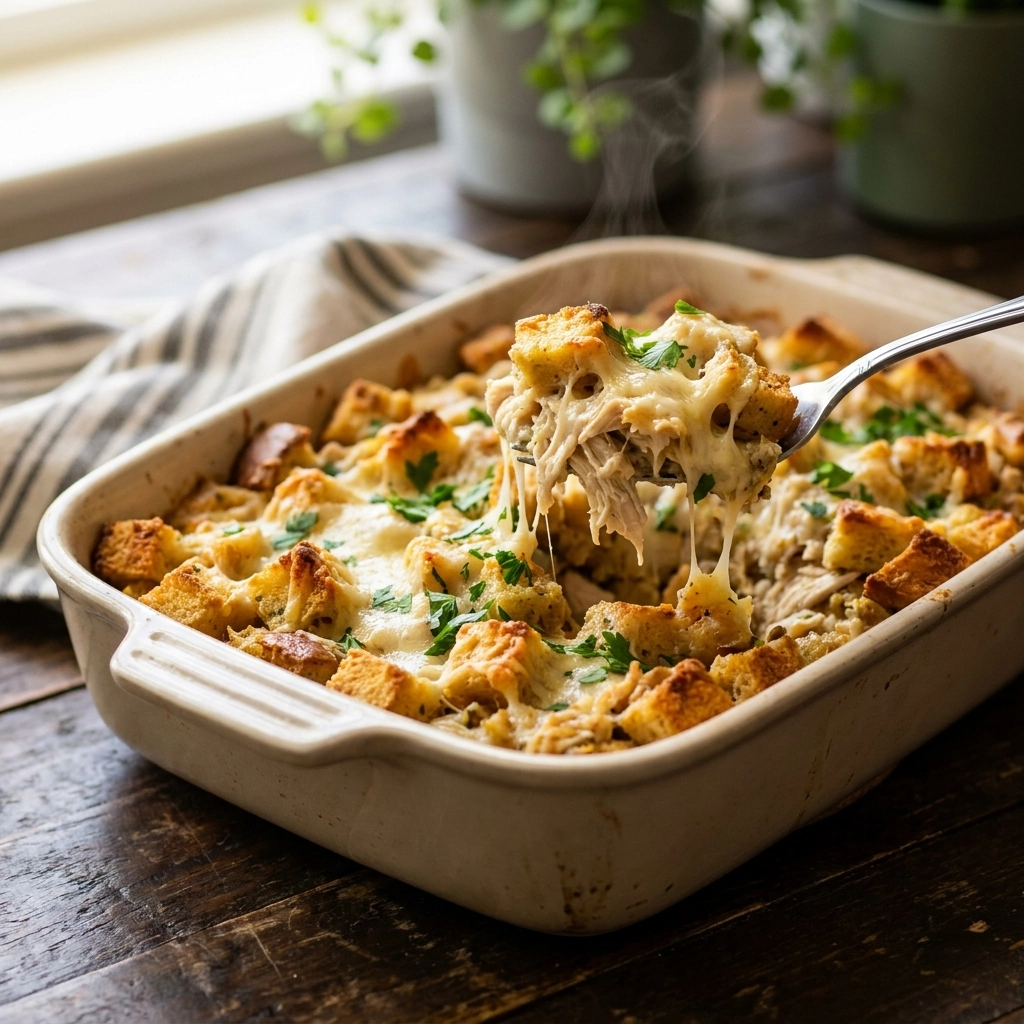
The Secret to Golden Cheese Bread |
I once believed that adding more cheese automatically equated to a better loaf. I dumped a massive amount of sharp cheddar into my first batch, only to find the dough became a greasy, sunken mess that refused to rise. It was a humbling lesson in the delicate balance between fats and gluten structure that every baker eventually learns.
This recipe is a sanctuary for those gray, rainy November afternoons when the house feels chilly. There is something deeply primal about the smell of melting butter and toasted yeast filling every corner of a room. It transforms a simple kitchen into a warm refuge from the damp autumn air outside.
- ●The crust achieves a professional, shattered-glass crispness.
- ●Interior crumbs remain light and airy despite the heavy cheese load.
- ●Customizable flavor profiles allow for endless variety.
- ●Simple ingredients are likely already sitting in your pantry.
- ●It pairs perfectly with everything from tomato soup to pasta.
Essential Ingredients |
Bread Flour provides a higher protein content than all-purpose flour. This creates a stronger gluten network, allowing the bread to support the heavy weight of the cheese without collapsing.
Instant Yeast acts as the biological engine of the bread. It consumes sugars to release carbon dioxide, which creates those beautiful air pockets and a light texture.
Warm Water activates the yeast cells. If the water is too hot, it kills the yeast; too cold, and the fermentation process slows to a crawl.
Unsalted Butter adds richness and tenderness. The fats coat the gluten strands, resulting in a softer crumb and a more luxurious mouthfeel.
Sharp Cheddar Cheese provides the primary flavor and fat. The acidity in a sharp cheddar cuts through the richness of the butter for a balanced taste.
Honey serves as a fuel source for the yeast. It also aids in browning the crust through the Maillard reaction during the baking process.
 Let’s Make it Together |
- Go ahead and whisk your flour, salt, and yeast in a large bowl. Make sure they are evenly distributed before you move on.
- Pour in your warm water and honey. Stir it gently with a wooden spoon until a shaggy dough forms. It will look messy. That is fine.
- Toss the dough onto a floured surface and start kneading. Push the dough away from you with the palms of your hands. Fold it back. Repeat this for about eight minutes.
- Place the dough in a greased bowl. Cover it with a damp cloth. Let it sit in a warm spot for an hour. Wait until it doubles in size.
- Punch the dough down to release the gas. Now, fold in your shredded cheese. Be gentle. You want the cheese distributed but not crushed into the dough.
- Shape the dough into a rustic loaf. Place it on a parchment-lined tray. Let it rise for another 30 minutes while the oven preheats.
- Slide it into the oven. Bake it until the top is deep golden brown. Let it cool for ten minutes before slicing.
Avoid using pre-shredded cheese from a bag.
The cornstarch in pre-shredded cheese prevents it from melting smoothly.
Do not over-knead the dough after adding the cheese.
Excessive handling at this stage can make the bread tough.
Ensure your water temperature stays around 110 degrees Fahrenheit.
Perfecting the Cooking Process |
Precision with temperature is the difference between a brick and a cloud. I recommend using a digital thermometer to check your water and an oven thermometer to verify your heat. Most ovens have hot spots that can burn the bottom of the loaf while the top remains pale.
The timing of the second rise is critical for the final texture. If you under-proof the loaf, it will burst violently in the oven. If you over-proof it, the bread will collapse. Look for the dough to spring back slowly when poked with a finger.
Add Your Touch |
Experiment with a blend of Gruyère and Fontina for a sophisticated, nutty flavor. You can also fold in roasted garlic cloves or fresh rosemary during the final kneading phase to add an aromatic punch.
Try brushing the top with a honey-butter glaze immediately after taking it out of the oven. A sprinkle of flaky sea salt on top creates a sweet and savory contrast that is absolutely addictive.
Storing & Reheating |
Store the bread in a breathable linen bag or a paper bag at room temperature for two days. Avoid plastic wrap, as it traps moisture and makes the crust soggy and soft.
To reheat, wrap a slice in foil and place it in a 350F oven for five minutes. This method restores the crispness of the crust without drying out the interior.
1Use a kitchen scale for accuracy.
2Measuring flour leads to overly dense bread.
3Check the internal temperature with a probe.
4The bread is done when it hits 190 degrees Fahrenheit.
5Wait until the bread is fully cool to slice.
FAQ |
- ●Q: Why did my cheese bread not rise properly?A: This usually happens if the yeast was expired or the water was too hot, killing the fungi. Ensure your yeast bubbles in the water before adding flour to confirm it is active and healthy.
- ●Q: Can I use all-purpose flour instead of bread flour?A: You can, but the result will be softer and less structured. Bread flour contains more protein, which is necessary to support the heavy weight of the cheese throughout the rise.
- ●Q: How do I stop the cheese from burning on top?A: If the cheese browns too quickly, loosely cover the loaf with a sheet of aluminum foil. This protects the surface from direct heat while the center continues to bake through.
- ●Q: Is it possible to make this recipe vegan?A: Yes, replace the butter with a high-quality vegan butter and use a plant-based cheddar alternative. Be aware that vegan cheeses melt differently, so keep a close eye on the browning.
- ●Q: Why is my bread crust too hard?A: This often occurs if the oven is too dry. Placing a small pan of water at the bottom of the oven creates steam, which keeps the crust supple while it expands.
- ●Q: Can I freeze the dough for later?A: You can freeze the first-rise dough in a freezer-safe bag. Thaw it in the refrigerator overnight before the final shaping and baking process to maintain the yeast’s integrity. Always keep in mind that results can vary depending on your specific ingredients, equipment, and kitchen conditions, so taste as you go and adjust accordingly for the best outcome.

Cheese Bread Recipe: Delicious and Easy Variations to Try Today
- Prep Time: 2 hours
- Cook Time: 25 minutes
- Total Time: 2 hours 25 minutes
- Yield: 1 loaf 1x
- Category: Bakery
- Method: Baking
- Cuisine: American
Description
A professional-grade cheese bread featuring a crisp, golden exterior and a soft, cheesy interior. Perfect as a side dish or a standalone snack.
Ingredients
- 3 cups bread flour
- 1 packet instant yeast
- 1 cup warm water (110F)
- 1 tbsp honey
- 1 tsp salt
- 2 tbsp unsalted butter, softened
- 1.5 cups sharp cheddar, shredded
Instructions
- Whisk flour, salt, and yeast in a large bowl.
- Stir in warm water and honey until a shaggy dough forms.
- Knead dough on a floured surface for 8 minutes.
- Let dough rise in a greased bowl for 1 hour.
- Punch down dough and fold in shredded cheese.
- Shape into a loaf and let rise for 30 minutes.
- Bake at 375F for 20-25 minutes until golden brown.